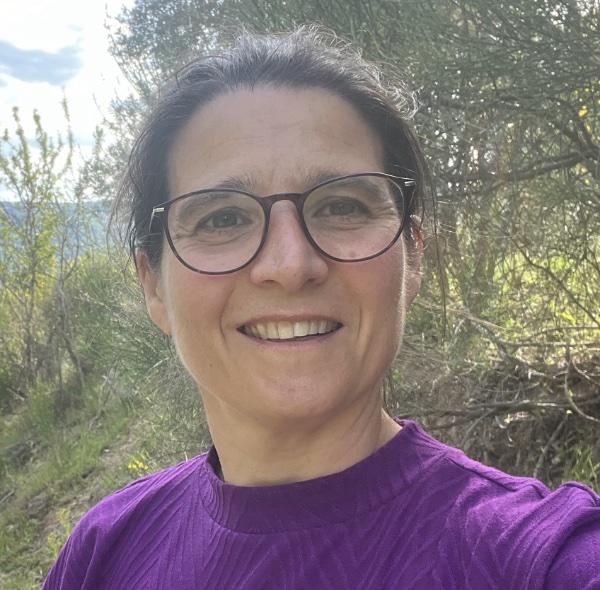
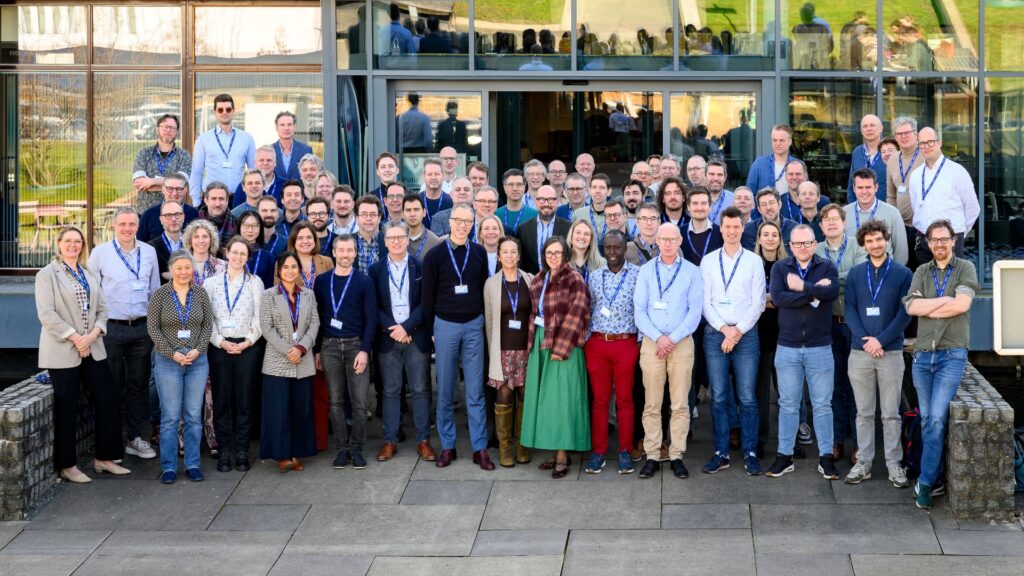
During the DigiShape workshop ‘Data-driven reconstruction of shipping accidents’ on 15 October, we spoke with Ivana Aleksovska, Scientific Officer at the Joint Research Centre of the European Commission. She attended the DigiShape Day D-OSP on the recommendation of Mark van Koningsveld of TU Delft.
With a background in applied mathematics and expertise in uncertainty quantification, sensitivity analysis, and data science, Ivana wanted to discover how DigiShape uses data to address stress and uncertainty in complex systems.
Ivana:
“This workshop by Fedor Baart was an interesting illustration of how to understand and respond to shocks. Although the focus was on shipping accidents, it is very much in line with our work in the field of shock areas such as war and climate.”

In her research, Ivana studies how war and climate change disrupt agricultural chains. The war in Ukraine has destroyed and abandoned large agricultural areas, while routes and export flows are constantly diverted.
Using a modeling framework based on large-scale data, her team aims to analyze the impact of shocks through mathematical modeling and contribute to solutions that support post-conflict recovery strategies, with the aim of strengthening the resilience of agricultural supply chains.
DigiShape’s approach particularly appealed to her. “I found it very interesting to learn more about how data is used in the shipping industry, especially the visualization part,” says Ivana. “The way QGIS was applied in the workshop showed clear, well-presented figures and provided inspiring examples of data visualization. I see many opportunities for future collaboration, for example with open-source tools such as OpenCLSim, which is being developed at TU Delft and has similar data challenges as in our work.”
This kind of cross-pollination between sectors is exactly what DigiShape stands for: sharing knowledge, connecting domains and building resilience together!