Within DigiShape, we are working on smarter sharing and use of data, models and AI within the water sector. But what if we also want to exchange data with other domains across the boundaries of our own sector? Think of the distribution of space in the North Sea, where the domains of shipping, energy and ecology meet. Or the nitrogen problem, where environmental, nature and agricultural data come together. Combining and using this data across organisational and domain boundaries is not yet self-evident in practice.
The DigiLab Applied Knowledge programme, which started in 2026, is working on the digital basis that should make such collaboration easier, safer and faster. Not only for water, but also for social challenges such as energy transition, sustainability, biodiversity, agriculture, food, health and safety. We spoke to program manager Bas van Vossen about the plans, the challenges and the possible connection with DigiShape.
What is DigiLab Applied Knowledge?
“DigiLab is intended to be a virtual research facility that allows data, models, algorithms and computing power to be used more easily and securely across organisational and domain boundaries,” says Bas. This involves the technical infrastructure and the joint agreements that are needed for this.”
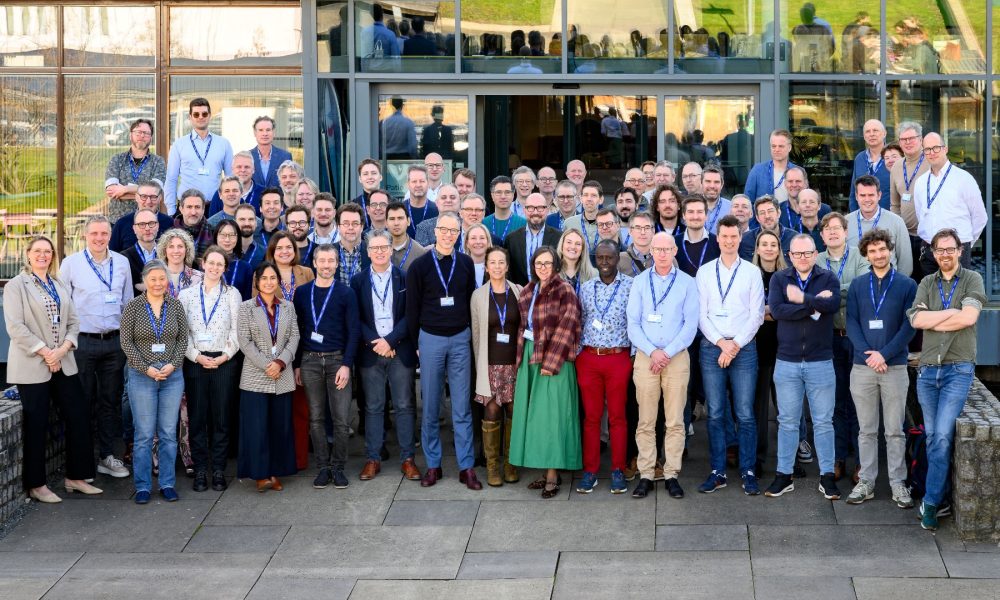
Ten knowledge institutions are working together on DigiLab: the TO2 institutes Deltares, MARIN, NLR, TNO and Wageningen Research, as well as KNMI, RIVM, Naturalis, the Netherlands Forensic Institute and the Cultural Heritage Agency of the Netherlands. SURF and TNO-ISP are involved as technology partners. The programme is funded by the Ministry of Economic Affairs through Facilities for Applied Research (FTO).
What should DigiLab ultimately make possible?
Bas explains that collaborating with data and models is still difficult in practice: “If, for example, MARIN and TNO want to work together on a project, you have to negotiate and coordinate contract conditions, intellectual property, where data will be placed and what infrastructure you use. In subsequent projects between them or with other parties, this has to be done again and again. This takes weeks to months of time and effort before a project can start.”
DigiLab wants to organize part of that basis in advance. In addition, it is quickly becoming more important that not only researchers can access and use data, but also computers and models through automated processes. Bas outlines the desired final picture: “If you start working together in a project, you should be able to have your virtual research environment with a few clicks of a button. You can then search for what data is available, what its quality is and under what conditions you can use it. You can then use AI algorithms and shared computing power, for example.”
For example, DigiLab should make collaboration easier and at the same time provide a basis for applications such as AI, simulations and digital twins. For Deltares, this is more than a technical development. “DigiLab directly affects how we will conduct applied research in the future: together with other knowledge institutions, based on shared data, models and computing power, and with clear agreements on quality, use and responsibility.”
Where is DigiLab now?
The development program started in early 2026 and will run for five years. In the first phase, the emphasis is on exploring possible technical and organizational solutions through the development of prototypes and the execution of principle tests on possible building blocks. Attention is paid to various aspects, including architecture and security, governance and operation, and community building, implementation and adoption. From concrete use cases, we always look at what DigiLab Applied Knowledge should be able to do in practice. “We select use cases per development stage that give us direction.” In about a year and a half, we expect to be able to create a first version that we will then improve step by step and expand with more functionalities and possibilities.
DigiLab deliberately starts within the consortium. “Giving technical and organizational shape to DigiLab Applied Knowledge with all those different organizations is already quite a job,” says Bas. “We are therefore starting with this group first to be able to take steps. We are advised on this by technology partner SURF.”
What challenges are there?
An important challenge is that different knowledge domains have their own standards, data formats and working methods. For example, what is needed in healthcare can differ greatly from agreements on geographical or water data. According to Bas, it is therefore not realistic to impose one standard for all domains from DigiLab. However, it must be made clear which agreements data within a certain ecosystem must comply with.
It must also be regulated who is allowed to see and use which data for what. “Some data is confidential, contains personal data or may only be used under certain conditions. In addition, governance, management and an operating model that will allow DigiLab to continue to function independently in the long term must be further developed.”
What does DigiLab Applied Knowledge mean for DigiShape?
“DigiLab is about the data streams, tools and computing power that you need for applied research,” says Bas. “DigiShape also plays a role in this. As the program progresses, it will also look at how stakeholders can join.
For the DigiShape community, the intended improved possibilities for using data, algorithms, models and computing power in conjunction are particularly interesting. “This can create interfaces with issues, datasets and expertise from the water sector. DigiLab Applied Knowledge itself must also connect to European initiatives such as the European Open Science Cloud.”
More information
Read more about DigiLab: https://www.digilabtoegepastekennis.nl